Ear drops are one of the treatments we prescribe most often in our practice in Punta Cana, especially for otitis externa or “swimmer’s ear”. But how well they work depends largely on how they are applied: if the liquid does not reach the ear canal or runs right back out, the treatment loses its effect.
What are ear drops used for?
They are liquid medicines placed directly into the ear canal. They are used, among other things, to:
- Treat outer ear infections, such as otitis externa.
- Soften and help remove excess earwax.
- Relieve itching, pain, discharge or a blocked feeling in the ear.
Before you start
- Check the label: make sure it is the right medicine and that it has not expired.
- Find out whether you need to shake the bottle before each use.
- Ask your doctor whether the drops go in one ear or both, how many drops, how often and for how many days.
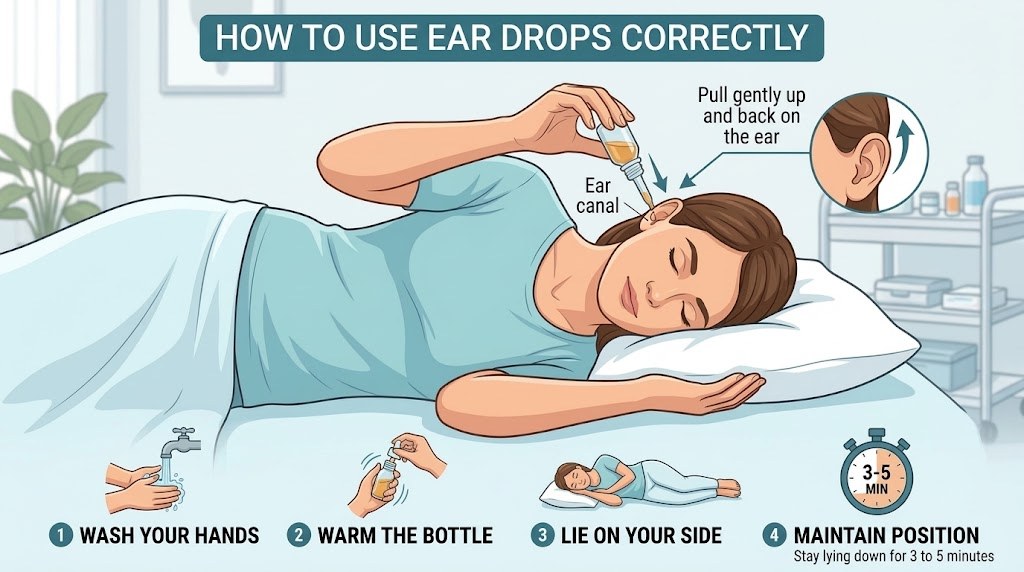
- Warm the bottle by holding it in your hand for 1 to 2 minutes. Drops that are too cold or too warm can make you dizzy.
Step by step
- Wash your hands with warm, soapy water. If you like, gently clean the outer ear with a damp cloth and dry it.
- Lie on your side (or tilt your head) with the affected ear facing up.
- Straighten the ear canal: in adults and older children, gently pull the ear up and back; in babies and young children, down and back.
- Hold the dropper tip close to the ear opening without touching it and put in the prescribed number of drops.
- Gently press or rub the small flap of skin in front of the ear canal (the tragus) a few times to help the drops go in.
- Stay in that position for 3 to 5 minutes.
- If your doctor recommends it, place a small piece of cotton at the ear opening to keep the liquid from running out.
- Rinse the dropper tip with hot water, dry it with a clean cloth, close the bottle tightly and wash your hands again.
Tip: put a towel under your head (or over your shoulder if you are sitting up); it is normal for a little liquid to run out.
Possible side effects
They are usually mild: itching, burning or stinging, more discharge, and dizziness, especially if the drops are cold. If they are severe or do not go away, see your doctor.
When not to use them without checking first
- If you have, or think you may have, a ruptured eardrum. Warning signs: very severe ear pain, ringing in the ear, trouble hearing or hearing loss. In that case, do not use drops.
- If you have ear tubes.
- If pus or blood is coming out of your ear.
Other tips
- Store the drops away from heat and sunlight; in Punta Cana’s climate, avoid leaving them in the car or at the beach.
- Do not share your ear drops with others: this can spread germs and infections.
- Finish the full course of treatment, even if you feel better sooner.
On Call Medical Assistance can see you at your hotel, villa or residence in Punta Cana and Bávaro if you have ear pain or questions about your treatment. Contact us.
This article is for educational purposes and does not replace evaluation by a healthcare professional. Reference: UpToDate, Patient education: How to use ear drops (The Basics), 2026.
Leave a Reply