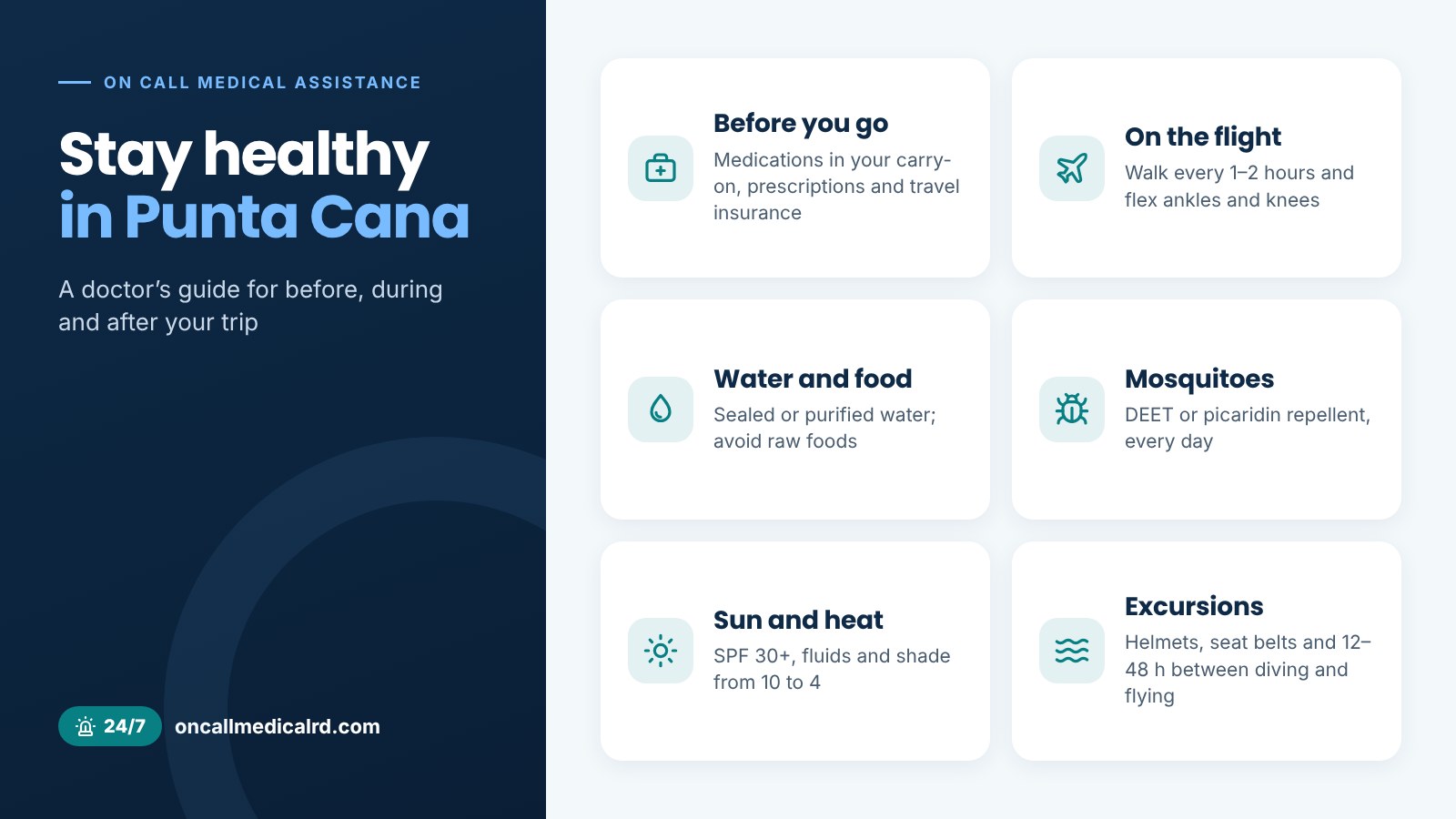
Most of the health problems we see in travelers — diarrhea that ruins two beach days, a severe sunburn, a fall on an excursion or a medication left at home — can be prevented with a little planning. Drawing on our experience caring for visitors in hotels, villas and homes across the Dominican Republic, here are the tips we recommend most for staying healthy in Punta Cana and beyond.
Before you travel
If possible, see your doctor or a travel medicine clinic at least one month before you leave. Bring the key details of your trip: how long you will stay, the areas you will visit, planned activities and the type of accommodation.
- Up-to-date vaccines. Check your routine vaccines (tetanus, flu, measles) and ask about those recommended for your destination, such as hepatitis A.
- Medications in your carry-on, never in checked luggage. Bring enough for the whole trip plus a few extra days, in the original packaging: some medications may not be available here or may be sold under a different name.
- A prescription or doctor’s letter, especially if you use insulin, syringes or controlled medications.
- Travel insurance with medical coverage. Check what it includes and keep the assistance phone number handy.
- A small first-aid kit: insect repellent, sunscreen, a pain and fever reliever, oral rehydration salts and adhesive bandages.
On the plane
On flights longer than 6 to 8 hours, such as those arriving from Europe or South America, sitting still for so long can cause leg swelling and, in some people, blood clots (deep vein thrombosis). To lower the risk:
- Get up and walk around every 1 to 2 hours.
- Flex your ankles and knees often, change position and avoid crossing your legs.
- Wear loose clothing and, if your doctor recommends it, knee-high compression stockings.
- Avoid sleeping pills and alcohol during the flight: they make you less likely to get up and move.
Ears and sinuses. Pressure changes can cause ear pain, especially if you fly with a cold. Ask your doctor or pharmacist whether a decongestant before the flight is right for you.
Jet lag. If you cross five or more time zones, melatonin (0.5 to 3 mg about 30 minutes before bedtime for the first few days) may help you adjust. Do not combine it with alcohol.
Motion sickness. If you get seasick easily, take your medication before boarding the catamaran or speedboat, not once symptoms start.
Water and food
Travelers’ diarrhea is the most common health problem in any tropical destination. It is usually mild, but it can dehydrate you and cost you several days of vacation.
- Drink sealed bottled or purified water, and use it to brush your teeth too.
- Choose bottled or carbonated drinks. Most hotels make ice with purified water; if in doubt, ask.
- Peel fruit yourself and avoid raw vegetables if you do not know how they were washed.
- Avoid raw or undercooked meat, fish and shellfish (including ceviche) and unpasteurized dairy.
- Wash your hands before eating or use hand sanitizer.
If you get diarrhea, drink oral rehydration salts. Seek medical care if you have fever, blood in the stool, vomiting that keeps you from drinking, or signs of dehydration (very dry mouth, little urine, dizziness).
Mosquitoes
In the Caribbean, mosquitoes can spread infections such as dengue. Protection works when you use it every day:
- Apply a repellent with DEET or picaridin to exposed skin, after sunscreen.
- At dusk and in green areas, wear long sleeves and long pants.
- Sleep in rooms with air conditioning, window screens or a mosquito net.
- If your itinerary includes remote rural areas, ask your doctor before the trip whether you need any additional precautions.
Sun, heat and sea
- Use SPF 30 or higher sunscreen and reapply it every 2 hours and after swimming.
- Drink water often, even more if you drink alcohol or exercise.
- Seek shade between 10 a.m. and 4 p.m., when the sun is strongest.
- Wear sandals off the beach: walking barefoot on soil or sand contaminated with animal feces can transmit parasites that enter through the skin.
- If you spend hours in the water, look after your ears: here is how to prevent swimmer’s ear.
Excursions and activities
- Scuba diving: wait 12 to 48 hours before flying, depending on the number and type of dives, to avoid decompression sickness. Confirm the timing with your instructor.
- Buggies, motorbikes and ATVs: wear a helmet, never ride after drinking and avoid night tours. Road accidents are one of the leading causes of serious injury in travelers.
- On the road: always wear a seat belt and, if you do not know the roads, use licensed transportation.
Traveling with a medical condition
- Pregnancy: most pregnant women can travel safely, but check with your obstetrician first, especially if you have had complications. Move often during the flight (pregnancy raises the risk of clots) and protect yourself from mosquitoes.
- Diabetes: keep insulin, glucose meter, test strips and snacks in your carry-on, and ask your doctor how to adjust your doses if you change time zones. Wear an ID that states your condition.
- Heart or lung disease: cabin air has less oxygen than air on the ground. If you use oxygen or tire easily, check with your doctor before flying.
When to seek medical care
During your stay, do not wait for a symptom to get worse. Get care right away if you have:
- Fever, especially with headache, muscle aches or a skin rash.
- Diarrhea with blood or fever, or lasting more than 2 or 3 days.
- Pain or swelling in one leg, or shortness of breath after a long flight.
- Sunburn with widespread blisters, fever or chills.
- A blow to the head, a deep wound or an animal bite.
And once you are home: if you develop fever, diarrhea or a rash in the following weeks, see your doctor and mention that you have been traveling.
On Call Medical Assistance is available 24/7 at your hotel, villa or residence in Punta Cana, Bávaro, Cap Cana and other areas of the Dominican Republic. If you feel unwell during your trip, contact us by phone or WhatsApp.
This article is for educational purposes and does not replace evaluation by a healthcare professional. References: UpToDate, Patient education: General travel advice (Beyond the Basics), 2026; CDC, Travelers’ Health.
Leave a Reply